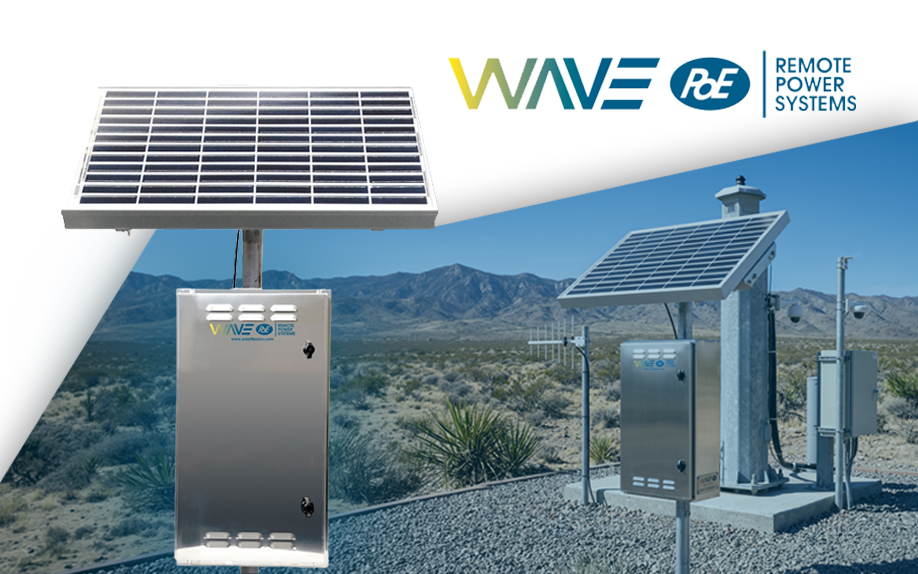
Power Your Devices Anywhere With WAVE Power Over Ethernet
Many connected devices require both power and network access to operate, but installing electrical infrastructure is not always practical. Remote properties, large facilities, agricultural sites, construction areas, and industrial locations often require monitoring and connectivity in places where running traditional power is expensive or difficult.
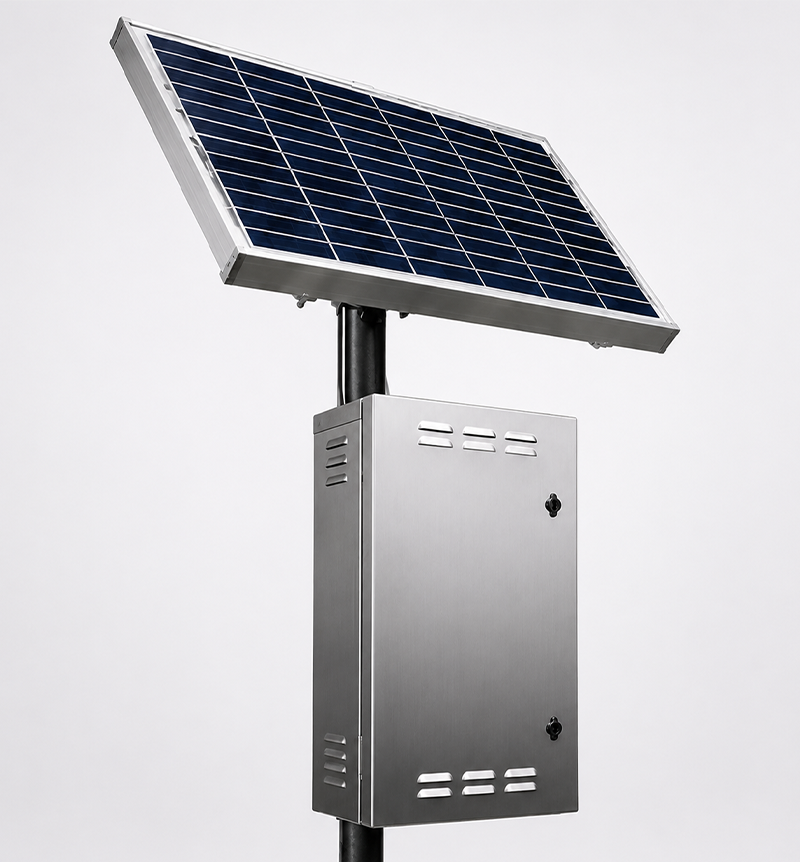
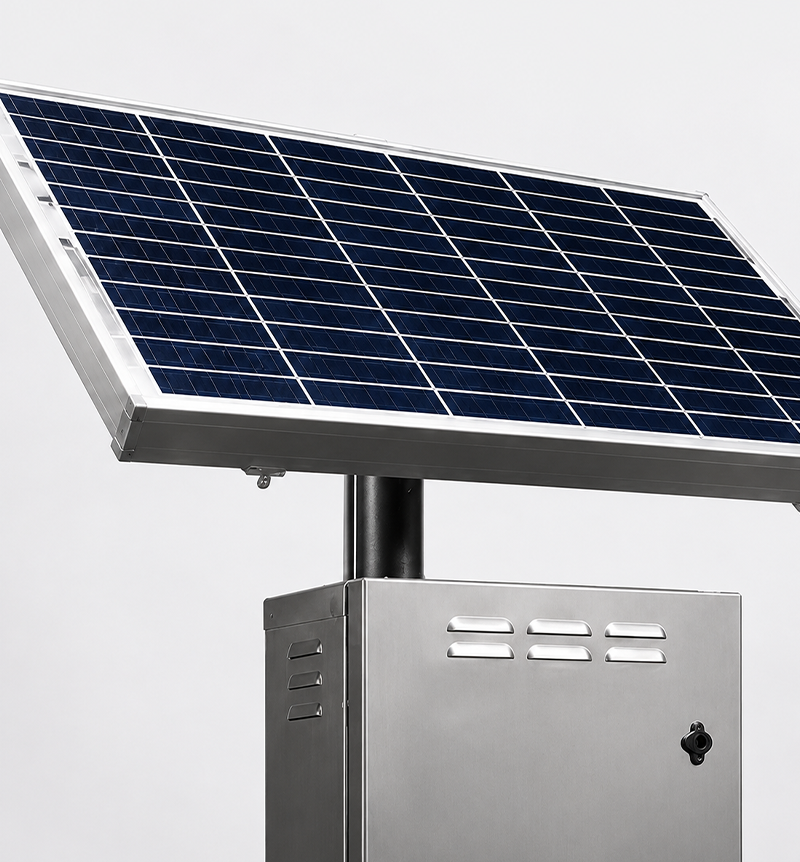
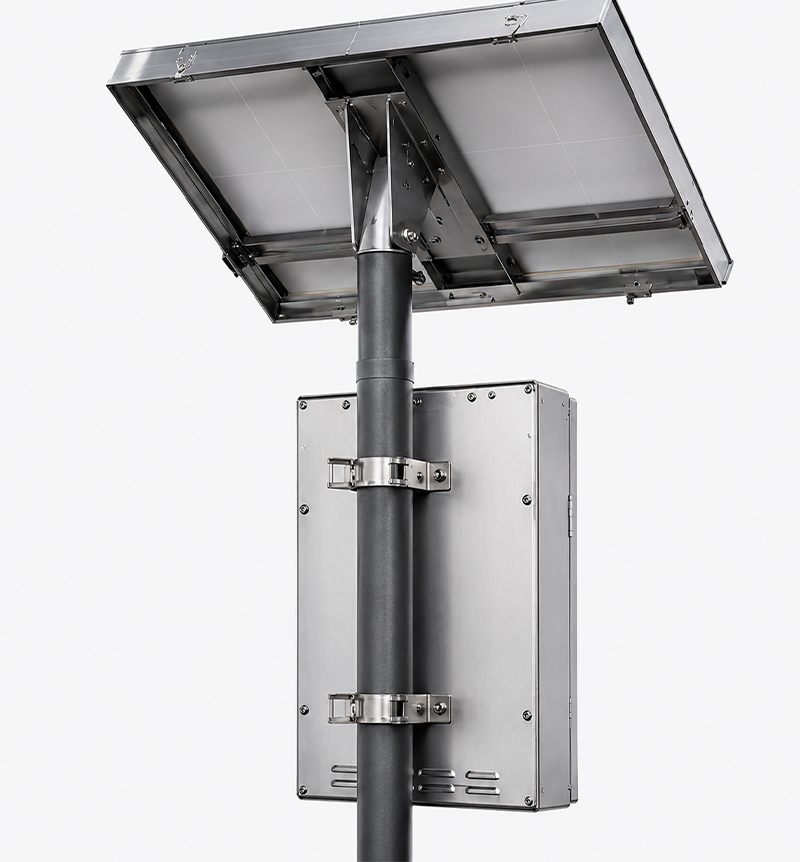
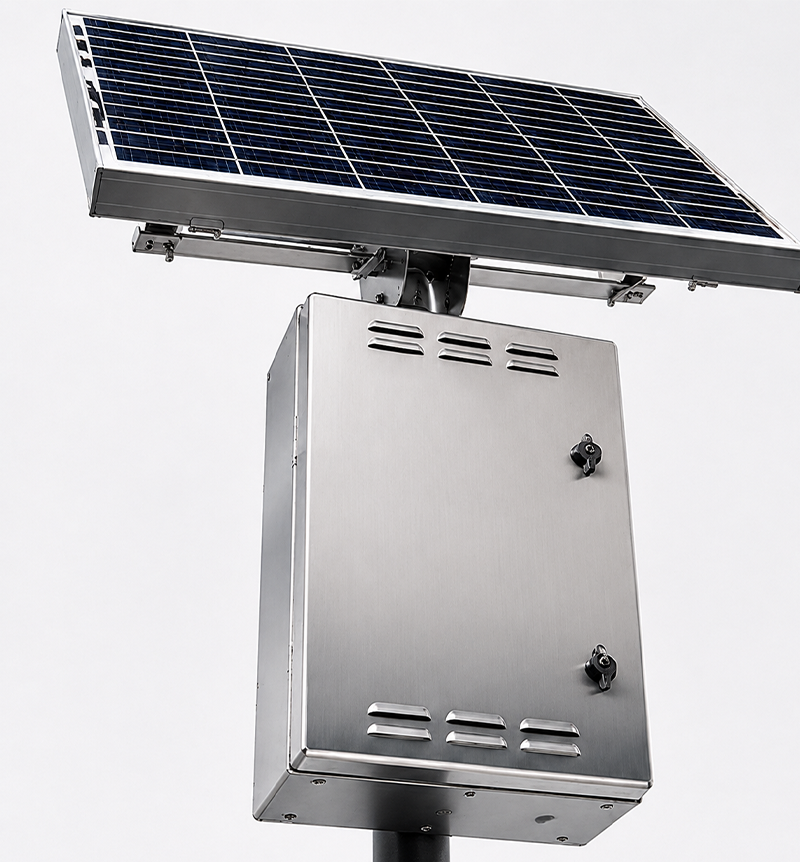
WAVE PoE combines Power over Ethernet technology with solar power to provide an independent solution for powering network devices in locations beyond the reach of traditional electrical systems. By using solar energy and battery storage, WAVE PoE helps provide reliable power for connected equipment without the need for trenching, long electrical runs, or new utility connections.
Power over Ethernet (PoE) allows both power and data to travel through a single ethernet cable. Instead of installing separate cables for electricity and network communication, PoE combines both functions into one simple connection. Think of PoE as a two in one cable. The same ethernet cable provides the power a device needs to operate while also allowing it to send and receive data. This creates a cleaner installation with fewer cables, less clutter, and easier setup.
PoE is commonly used for devices such as security cameras, wireless access points, network sensors, IoT devices, and remote monitoring equipment where reliable power and communication are needed.
WAVE PoE Compared to Traditional Power Solutions
Traditional electrical installations work well when power is already nearby. However, extending electricity to remote locations can require: trenching, electrical permits, conduit installation, additional labor, and higer project costs. WAVE PoE provides an alternative by allowing connected devices to be installed where they are needed without extending utility power.
Traditional Power
WAVE PoE
Requires electrical infrastructure
Uses solar generated power
Separated power & data wiring
Power & data through one ethernet cable
More installation steps
Simplified deployment
Limited by existing power access
Designed for remote locations
How WAVE PoE Works With Solar
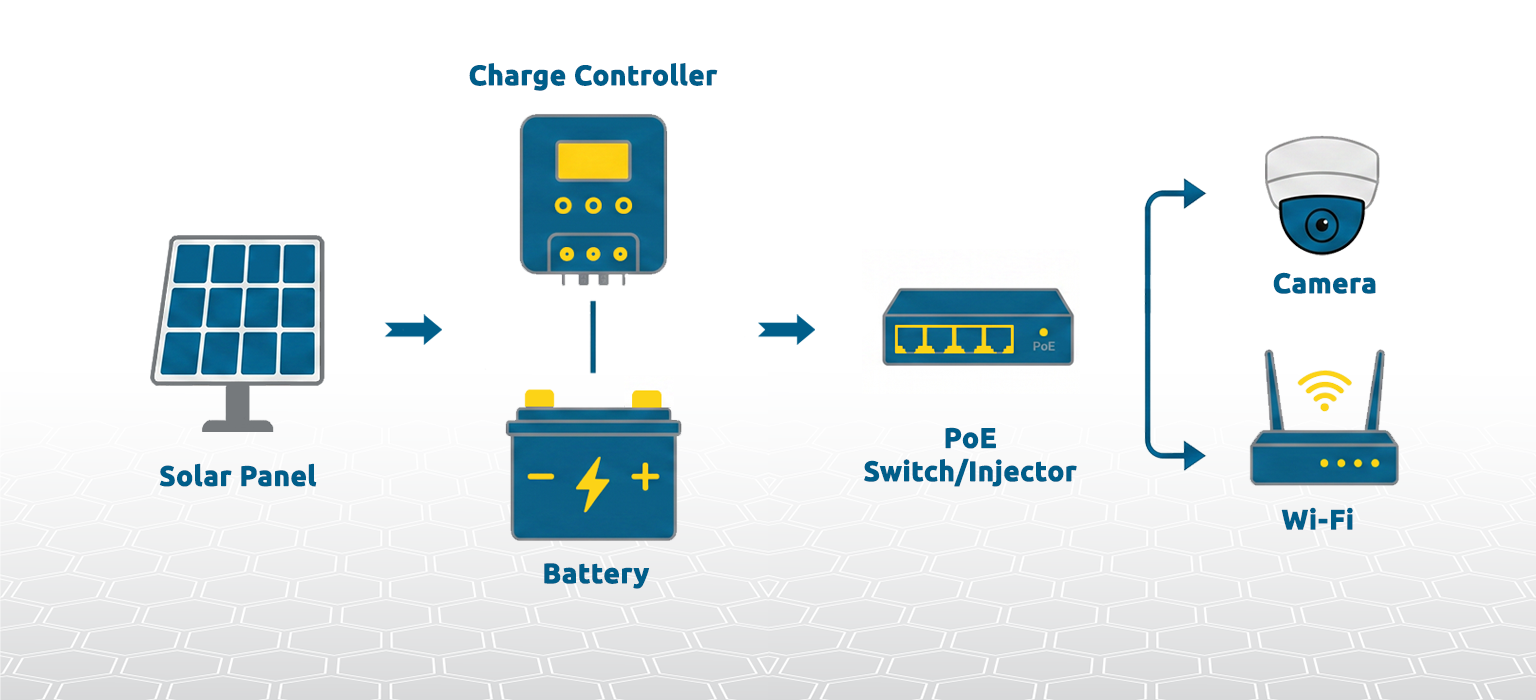
A solar powered WAVE PoE system combines renewable energy with Power over Ethernet (PoE) technology to generate, regulate, store, and deliver power to compatible network devices. Each component plays an important role in moving energy from the solar panel to the connected equipment.
Solar Panel
Solar panels capture sunlight and convert it into electricity to power the system during daylight hours.
Charge Controller
The charge controller regulates energy from the solar panel to safely charge and maintain the battery.
Battery Storage
Batteries store excess solar energy so connected devices can continue operating when sunlight is unavailable.
WAVE PoE
The PoE Switch / Injector receives DC power and delivers power and network communication to compatible devices.
Connected PoE Devices
Compatible devices are powered while simultaneously exchanging network communication, creating a cleaner and more efficient installation.
Unlike many traditional solar installations that convert DC power into AC using an inverter before powering equipment, a WAVE PoE system maintains DC power throughout the process. Since PoE devices are designed to operate on DC power, the system bypasses the inverter entirely, reducing conversion losses, lowering equipment costs, and improving overall efficiency. With fewer components to install and maintain, the result is a simpler, more reliable solution for powering network connected devices in remote and off-grid locations.
Common WAVE PoE Applications
The possibilities for WAVE PoE are nearly endless. As solar technology and connected devices continue to evolve, more applications are emerging where dependable power and network connectivity are needed in locations without access to utility power. Whether you're securing a remote property, expanding wireless coverage, supporting automated systems, or powering equipment in the field, WAVE PoE offers a flexible solution that can grow with your needs. By combining the long term benefits of solar energy with the simplicity of Power over Ethernet, WAVE PoE makes it possible to deploy network devices in places that were once difficult or impractical to reach. Below are some of the most common real world applications we're seeing today, demonstrating how customers are using WAVE PoE to power reliable, connected solutions in a wide variety of environments.
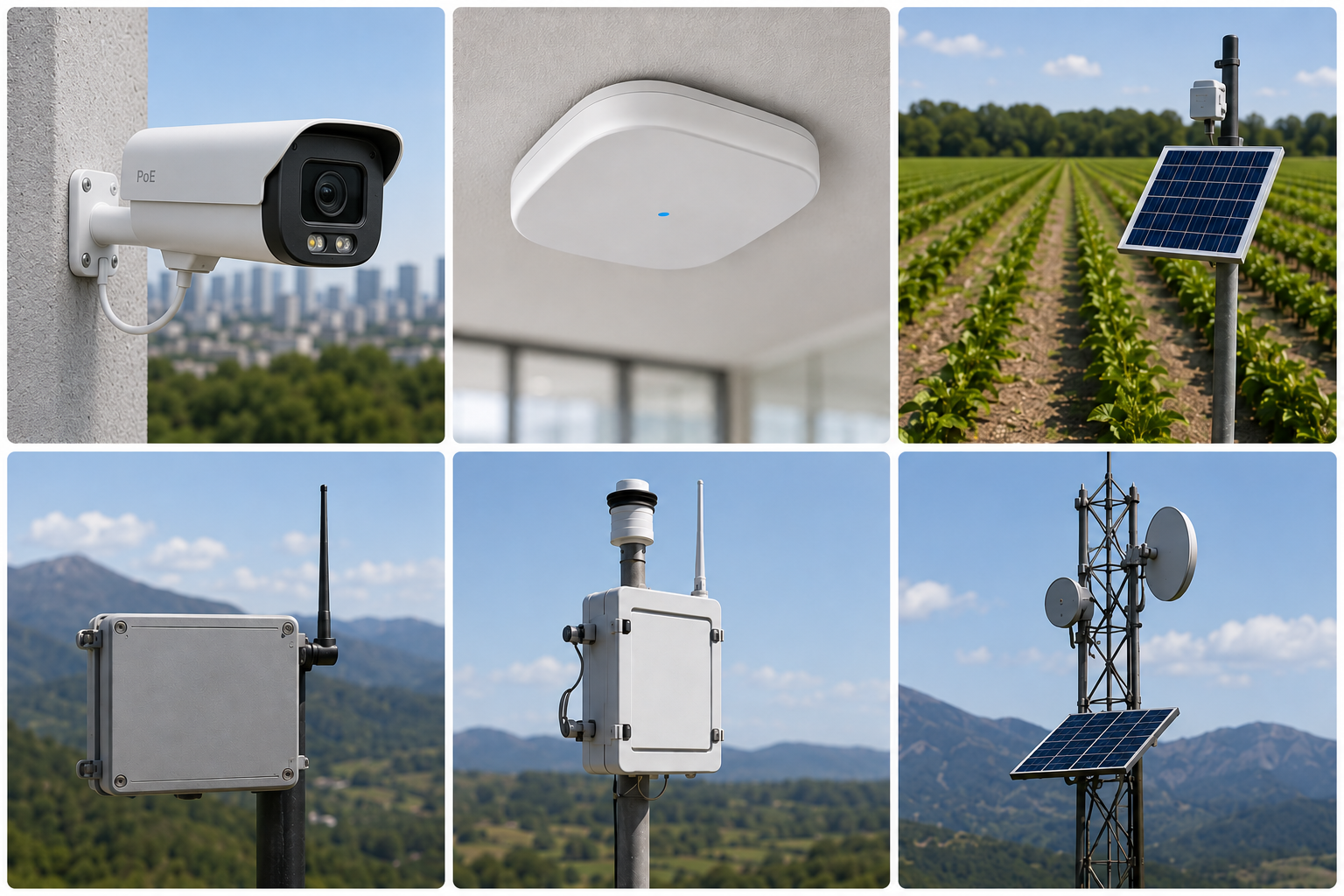
SECURITY CAMERAS
Power remote security cameras for homes, farms, construction sites, and remote properties.
WIRELESS ACCESS POINTS
Extend wireless connectivity to areas where traditional power is difficult to install.
REMOTE MONITORING
Provide dependable power for monitoring equipment in remote locations.
SMART AGRICULTURE
Support connected farming sensors, monitoring equipment, and automation systems.
COMMUNICATE OFF-GRID
Power communication equipment where grid electricity is unavailable.
IOT DEVICES
Connect and power smart sensors and connected devices for automation and data collection.
Security Cameras
Solar powered WAVE PoE systems are ideal for surveillance locations where running traditional electrical power is difficult or expensive. Common applications include:
Farms and agricultural properties
Construction sites
Parking areas
Gates
Large properties
Remote facilities
Example: Expanding Security Coverage Without Extending Utility Power
A commercial property owner needs to monitor an overflow parking lot located several hundred feet from the main building. Existing security cameras cover entrances and nearby areas, but the distant parking area remains unmonitored. Extending power to the new camera location would require trenching across pavement, installing conduit, repairing surfaces, and coordinating electrical work, creating additional cost, labor, and disruption.
A solar powered WAVE PoE system provides an alternative solution. Mounted on a pole or mobile surveillance trailer, the system uses solar energy and battery storage to power the camera while WAVE PoE delivers both power and network connectivity through an ethernet cable. This allows the property owner to quickly expand surveillance coverage without major infrastructure changes. A mobile setup also provides flexibility for temporary locations, construction projects, special events, seasonal parking, or changing security needs.
Wireless Access Points
Large properties often need wireless connectivity beyond the reach of existing network infrastructure. Areas such as resorts, campgrounds, outdoor event spaces, warehouses, and commercial properties may require additional Wi-Fi coverage for guests, employees, operations, or connected devices. WAVE PoE allows wireless access points to be deployed in locations where installing traditional electrical infrastructure may not be practical, giving organizations more flexibility in where they provide network access.
Example: Expanding Resort Wi-Fi Coverage
A resort provides Wi-Fi throughout its main buildings, but coverage is limited in outdoor areas such as pool decks, event spaces, parking areas, walking paths, and recreational facilities. Installing new electrical service to these locations could require extensive construction, permitting, and ongoing infrastructure costs. A solar powered WAVE PoE system provides an alternative by supplying power and network connectivity for outdoor wireless access points without the need to extend utility power. This allows the resort to improve guest experiences, support outdoor operations, and expand wireless coverage into areas that were previously difficult to connect.
Remote Monitoring
Many industries rely on sensors, cameras, and networkconnected equipment to monitor operations, improve safety, and identify issues before they become costly problems. However, critical assets are often located in remote areas where access to power and network infrastructure is limited. WAVE PoE helps organizations deploy monitoring equipment in locations that are difficult to reach by combining solar power with Power over Ethernet technology. This allows devices to collect and transmit data without requiring new electrical infrastructure.
Applications include:
Industrial equipment monitoring
Energy and utility sites
Remote facilities
Infrastructure monitoring
Field operations
Example: Monitoring a Remote Oil Field Site
An oil field operator needs real time visibility into equipment performance at a remote well site located miles from the main facility. Cameras, sensors, and other network connected devices are needed to monitor operations, improve safety, and detect potential issues. Installing utility power at the site would require significant construction, permitting, and long term maintenance. A solar powered WAVE PoE system provides an independent power solution for the monitoring equipment while delivering network connectivity.
The result is a flexible monitoring solution that helps operators collect critical data, respond faster to issues, and maintain awareness of remote operations without expanding traditional electrical infrastructure.
Smart Agriculture
Modern agriculture increasingly uses connected technology to monitor conditions, automate processes, and improve resource management. Sensors, cameras, and network connected equipment help farmers make informed decisions by providing real time information from across their operations. Large farms, vineyards, and orchards often require monitoring equipment in areas that are far from existing buildings or electrical service. WAVE PoE enables these systems to be deployed throughout agricultural properties by combining solar power with Power over Ethernet connectivity. By delivering power and data, WAVE PoE simplifies the installation of smart farming technology in locations where extending traditional electrical infrastructure may not be practical.
Applications include:
Irrigation monitoring
Environmental sensors
Crop and soil monitoring
Equipment tracking
Remote field cameras
Example: Monitoring Vineyard Conditions
A vineyard owner wants to collect data from multiple areas across several acres to improve crop management and resource efficiency. Installing monitoring equipment throughout the property would require power access at each location, creating additional infrastructure challenges. A solar powered WAVE PoE system allows sensors and network connected devices to be installed where they are needed without running new electrical lines. The system can support equipment that monitors environmental conditions, tracks irrigation performance, and provides valuable data to help optimize vineyard operations.
Communicate Off-Grid
Many industries depend on communication and monitoring equipment to manage assets located far from existing infrastructure. Remote sites such as energy facilities, pipelines, utility locations, and industrial operations often require cameras, wireless equipment, and sensors to maintain visibility and support daily operations. WAVE PoE combines solar energy, battery storage, and Power over Ethernet technology to provide a flexible way to deploy connected devices in locations where utility power is unavailable or impractical. By delivering both power and data, WAVE PoE helps simplify installations for remote communication and monitoring systems.
Applications include:
Remote security cameras
Wireless communication links
Equipment monitoring
Pipeline and infrastructure monitoring
Remote industrial sites
Example: Remote Oil Field Communication
An oil company operates multiple well sites across a large geographic area where utility power is limited or unavailable. These locations require communication systems for security, equipment monitoring, and operational data collection, but extending electrical service to each site may require significant construction and ongoing maintenance. A solar powered WAVE PoE system can provide an independent power source for remote equipment. Solar panels generate energy during the day, battery storage supports operation when sunlight is unavailable, and WAVE PoE supplies power and network connectivity to connected devices.
For example, a remote pump station can use WAVE PoE to power a security camera and wireless communication equipment. Operators can remotely monitor site conditions, receive equipment data, and improve response times without requiring frequent visits or expanding traditional electrical infrastructure. The same approach can be applied to pipelines, storage facilities, utility assets, and other remote locations where maintaining communication is critical.
IoT Devices
Internet of Things (IoT) devices use sensors and network connectivity to collect information, monitor conditions, and automate processes. These devices help organizations make better decisions by providing real time data from equipment, facilities, and remote locations. In remote environments, IoT technology can provide valuable insight without requiring frequent site visits. However, sensors and connected devices still need a dependable power source and network connection to operate. WAVE PoE helps support these applications by providing solar powered energy and Power over Ethernet connectivity where traditional infrastructure may not be available.
Applications include:
Tank level monitoring
Equipment performance tracking
Environmental monitoring
Remote facility management
Industrial sensors
Example: Remote Water Facility Monitoring
A water facility uses IoT sensors to monitor storage tank levels and equipment performance at a remote location. Without remote monitoring, operators may need to make frequent site visits to check conditions manually. A solar powered WAVE PoE system provides the power and network connection needed for sensors to transmit real time data back to operators. Tank monitoring helps prevent issues such as unexpected shortages, overfilling, or inefficient supply management. Equipment monitoring can also track conditions such as pressure, temperature, vibration, and system performance. This allows maintenance teams to identify potential issues earlier, reduce downtime, and address problems before they become larger operational concerns.
See the WAVE PoE in action in the real world. The video below showcases a project Solarflexion completed with a local airport, demonstrating how WAVE PoE delivers reliable power and network connectivity for remote security camera locations. Although grid power was available at the site, installing dedicated AC outlets at each camera location would have required costly electrical work and licensed electricians. By implementing WAVE PoE, the airport was able to significantly reduce installation costs while avoiding the complexity of extending traditional power infrastructure. This project highlights how WAVE PoE provides a smarter, more cost effective way to deploy security cameras and network devices in locations where running conventional power is expensive, time consuming, or impractical.
Frequently Asked Questions
You're here because you want to learn more about WAVE Power over Ethernet (PoE) and how it can help simplify powering connected devices in remote and off-grid locations. We understand that choosing the right solution requires knowing how it works, what components are needed, and whether it is the right fit for your application. Explore the most common questions customers ask about WAVE PoE, including how it works with solar power, what devices it can support, installation considerations, and how it compares to traditional PoE solutions.
If you don't see your question here, feel free to give us a call at 800-942-2424. Our team will be happy to answer your questions, discuss your application, and help you determine the right WAVE PoE solution for your project.
What makes WAVE PoE different from traditional PoE?
Traditional Power over Ethernet (PoE) systems are commonly installed in buildings or locations where utility power is already available. They use existing electrical service to deliver power and network communication to devices such as security cameras, wireless access points, and other compatible equipment. WAVE PoE is designed for applications where utility power is unavailable, impractical to extend, or too costly. When paired with solar panels and battery storage, it enables network connected devices to operate in remote and off-grid locations without requiring new electrical infrastructure.
The primary difference is deployment flexibility. Traditional PoE depends on nearby electrical service, while WAVE PoE allows connected equipment to be installed where it is needed most, making it well suited for remote monitoring, outdoor networking, and other off-grid applications.
Can WAVE PoE be powered by solar?
Yes. WAVE PoE is designed to operate with solar energy, making it well suited for remote and off-grid applications. During the day, the solar panel generates electricity to operate connected equipment while recharging the battery. After sunset or during periods of limited sunlight, the battery supplies the stored energy needed to keep devices running. This approach allows security cameras, wireless access points, sensors, and other network connected equipment to operate in locations where utility power is unavailable or impractical.
What solar components are needed to run WAVE PoE?
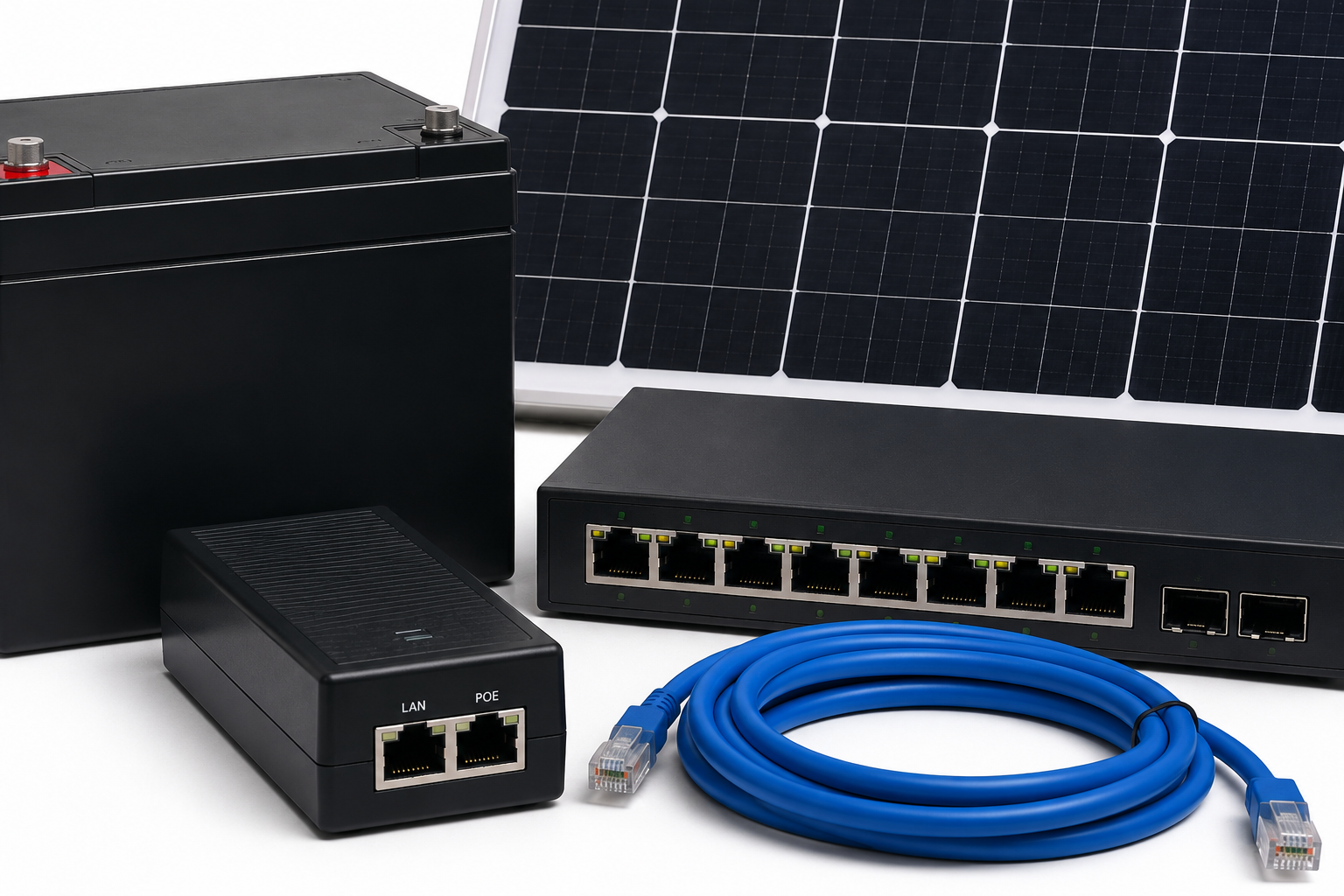
A typical solar powered installation includes the following components. The exact configuration depends on the application, installation location, connected equipment, and the amount of battery backup required.
The basic components include:
Solar Panel
Solar Charge Controller
Battery Storage
WAVE PoE Device
Ethernet Cable
Compatible PoE Devices such as a security camera or a wireless access point
Each component should be selected to work together, with the solar panel, charge controller, battery, and WAVE PoE device sized to meet the energy requirements of the connected equipment. When properly configured, these components create a self contained solution that can operate network connected devices in locations where utility power is unavailable or impractical.
How do I size my solar system for WAVE PoE?
Sizing a solar powered system starts with understanding the requirements of the equipment you plan to operate. Every installation is different, whether you're powering a single security camera at a remote gate or multiple network devices across a large property. Factors such as energy consumption, available sunlight, installation location, and the desired amount of battery backup all influence the final design.
The first step is calculating the total daily energy usage. Determine the wattage of each device, the number of devices, and how many hours they will operate each day. For equipment that runs continuously, multiply the total wattage by 24 hours to estimate daily energy consumption. This information is used to determine the appropriate solar panel output, battery capacity, and supporting components. Next, evaluate the site's solar resource. Panel output varies based on geographic location, seasonal sunlight, orientation, and shading. The array should produce enough energy to operate the equipment during the day while also recharging the batteries for overnight use and periods of reduced sunlight. Including additional solar capacity can help compensate for changing weather conditions and improve long-term reliability.
Battery storage is equally important. It supplies energy whenever solar production is unavailable, such as overnight or during extended cloudy weather. Battery capacity should be selected based on daily energy use, the desired backup time, battery chemistry, and expected operating conditions. Finally, all components, including the solar panel, charge controller, battery, WAVE PoE system, network equipment, and connected devices must be compatible and properly sized. Matching voltage, power output, and capacity helps ensure safe, reliable operation and long term performance.
If you're unsure how to size your system, Solarflexion can help design a solution based on your equipment, location, and runtime requirements.
Will WAVE PoE work at night?
Yes. When WAVE PoE is paired with a properly sized solar power system and battery storage, it can operate 24 hours a day, including throughout the night. During daylight hours, the solar panel generates electricity to power the connected devices while simultaneously recharging the battery. Once the sun sets, the battery automatically takes over, supplying stored energy to keep the system running without interruption.
The amount of nighttime operation depends on several factors, including the battery capacity, the power consumption of the connected PoE devices, the size of the solar panel, and the amount of sunlight received during the day. A properly designed system ensures the battery is fully recharged each day so it has enough stored energy to power the system through the night and during periods of cloudy weather.
One of the greatest advantages of a solar powered WAVE PoE system is its energy independence. Instead of relying on the electrical grid, the system continually generates renewable energy during the day, stores excess energy in the battery, and uses that stored power after sunset. This daily charging and discharging cycle repeats automatically, providing dependable power year round with minimal maintenance. For critical applications such as security cameras, wireless access points, remote monitoring equipment, and off-grid communication systems, proper system sizing is essential. Selecting the appropriate solar panel, battery capacity, and WAVE PoE components helps ensure reliable operation day and night, even in remote locations where traditional electrical infrastructure is unavailable.
How long can WAVE PoE operate without sunlight?
The amount of time a WAVE PoE system can operate without sunlight depends on battery capacity, the amount of stored energy, and the power requirements of the connected devices. Because every installation is different, runtime varies based on the equipment being powered and the level of backup needed. For example, a system supporting a single low power security camera will typically operate longer than one powering multiple cameras, wireless access points, or other network equipment.
Most solar powered systems are designed with enough battery storage to operate throughout the night and, in many cases, continue running for one or more additional days during periods of limited sunlight. This backup capacity, often called battery autonomy, helps maintain operation during cloudy weather, storms, or other times when solar production is reduced. Actual runtime is influenced by several factors, including battery capacity, daily energy consumption, available sunlight, seasonal conditions, and overall system efficiency. Increasing battery storage extends the available backup time, while adding more solar capacity helps restore stored energy more quickly once sunlight returns.
A properly designed WAVE PoE system balances solar production, battery storage, and the energy requirements of connected equipment to deliver reliable, around the clock operation. At Solarflexion, every solar power system is sized in accordance with the IEEE 1562 Recommended Practice for Sizing Stand-Alone Photovoltaic (PV) Systems, ensuring the system is engineered to meet the specific energy demands of your application. Depending on your project requirements, Solarflexion can design systems with up to 99.99% system availability, providing dependable power even in challenging weather conditions. Whether your application requires overnight operation or several days of backup power, our team can design a WAVE PoE solution that meets your runtime and reliability goals.
How far can I install a device from the WAVE PoE system?
Our WAVE PoE system is designed as a complete, self contained power solution installed directly at the location where power is needed. The solar panel, battery, charge controller, PoE switch/injector, and connected PoE device are all installed together at the remote site, eliminating the need to run long power cables from a main building or electrical source.
Do I need to run electrical wiring to the PoE device?
No. One of the main advantages of WAVE PoE is that it eliminates the need for separate electrical wiring to the connected device. It delivers both DC power and network communication through a single ethernet cable, removing the need for a dedicated circuit, outlet, or nearby utility service.
In a conventional installation, equipment such as a security camera or wireless access point often requires separate cable connections for electricity and network access. WAVE PoE combines both into a single cable, simplifying installation and reducing the amount of wiring required. When paired with a solar energy system, it can support connected equipment in locations where utility power is unavailable or impractical to extend. This makes it well suited for applications such as rural properties, construction sites, oil fields, agricultural operations, and other remote locations.
Does WAVE PoE provide internet service?
No. WAVE PoE does not provide internet service. It supplies power and network connectivity for compatible devices, but an independent internet source is still required. To connect devices such as security cameras, wireless access points, or monitoring equipment to the internet, you will need a separate service such as a cellular modem, satellite connection, wireless provider, or fiber network.
For example, a remote security camera setup may include a solar panel, battery storage, WAVE PoE, a cellular modem, and a PoE camera. The solar system supplies energy, WAVE PoE powers the camera, and the cellular modem provides the internet connection needed for remote access. WAVE PoE helps deploy network connected equipment in locations without traditional electrical service, but the internet connection comes from a separate networking provider.
Solarflexion can help simplify the entire solution. In addition to designing and sizing the solar power system, we can provide compatible cellular routers and modems that integrate with your WAVE PoE installation. You simply supply an active SIM card from your preferred cellular carrier and we'll help ensure all of the components work together as a complete remote power and connectivity solution. By separating power generation from internet service, WAVE PoE gives you the flexibility to choose the connectivity option that best fits your location and application while providing dependable solar powered operation for both your equipment and the networking hardware that keeps it connected.
Can I use WAVE PoE with my existing security camera?
Yes, in many cases. Your existing security camera can work with WAVE PoE as long as it supports Power over Ethernet (PoE) and meets the required power specifications. Before connecting your camera, verify that it is PoE compatible, confirm its voltage and power requirements, and ensure it works with the overall network setup. Some installations may require additional networking equipment depending on the camera type and application.
For example, an existing PoE security camera at a remote gate, barn, construction site, or property entrance can be powered using a solar based WAVE PoE solution without the need to run new electrical wiring. If the camera does not support PoE, additional hardware may be needed to integrate it into the setup. Solarflexion can help review your equipment requirements and determine the appropriate configuration for your application.
Why use WAVE PoE instead of installing electrical power?
Traditional electrical power remains the best option for many installations. However, extending utility service to certain locations can be challenging due to distance, terrain, permitting requirements, construction costs, or site restrictions. WAVE PoE provides an alternative for applications where adding new electrical infrastructure is not practical. By combining solar energy, battery storage, and Power over Ethernet technology, it allows network connected equipment to operate independently without requiring a new utility connection.
Instead of installing underground wiring or extending power over long distances, WAVE PoE enables devices such as security cameras, wireless access points, and monitoring equipment to be deployed where they are needed. Solar energy charges the battery during daylight hours, providing stored energy for continued operation when sunlight is unavailable. Common applications include rural properties, construction sites, oil fields, mining operations, water facilities, farms, parks, and large commercial properties.
The purpose of WAVE PoE is not to replace traditional electrical power, but to provide a practical solution when extending utility service is too costly, disruptive, or unavailable for the application.
Can WAVE PoE be used in extreme environments?
Yes. WAVE PoE can be designed for demanding environments where utility power is unavailable, difficult to access, or costly to extend. With the right combination of solar generation, battery storage, protective enclosure, and compatible network equipment, it can support connected devices in challenging conditions. Remote and industrial locations often require equipment to operate through harsh weather, rugged terrain, and limited infrastructure. Proper system design is essential to ensure reliable performance. Factors such as temperature extremes, environmental exposure, available sunlight, battery capacity, enclosure rating, and required operating time should all be evaluated when selecting the appropriate components.
Ready To Simplify Your Power Installation?
Solarflexion offers two standard WAVE PoE systems as a starting point, but most projects require a custom designed solution based on your specific application, power requirements, location, and operating conditions. Our team can help size the solar system, battery storage, and WAVE PoE components to ensure reliable performance for your unique installation. To discuss your Power over Ethernet project or request a custom system quote, contact our solar experts at 800-942-2424.